Live from the Croisette, the AI conversation has moved past creative tooling into agentic commerce — autonomous systems that decide and transact for consumers. Here's what it means for brands, and why understanding the buyer before the agent does is now the work.
The Cannes Festival of Creativity has long been the barometer for the marketing industry. It decides what story gets told for the year ahead, how to tell it, and which partnerships will bring it to life. Live from the Croisette this week, the conversation about AI has moved past creative tooling and into the autonomous systems that decide and transact on behalf of consumers: agentic commerce.
Our CEO and Co-Founder, Adrienne Murga, is on the ground at the festival this week — learning from brands, agencies, and talent alike about the shift in how the industry talks about AI and automation. After attending sessions, meeting with clients, and talking with industry leaders, we've summarized the key themes that will define what agentic commerce means for brands thus far, and why understanding the buyer before the agent does is now the work.
Want to see how eLLMo AI helps brands connect with customers — and the agents now shopping on their behalf? Explore the platform.
From AI Hype Cycle to Operating Model
AI has only recently dominated the Cannes conversation, but the trajectory has been visible for three years running:
- 2023: AI hype begins.
- 2024: AI is cautious experimentation — pilots, governance committees, legal review.
- 2025: Generative AI becomes the connective tissue across content, media, and measurement, stitched together by foundation models.
- 2026: The recurring language isn't generation. It's agents, interoperability, and control.
The phrase agentic commerce is being used loosely on the Croisette as ad-tech announcements cluster around adjacent topics such as agent-to-agent conversations, and the governance layer that decides what an agent is allowed to do on a brand's behalf. The hype-cycle framing is being retired in public, on stage, this week as new conversations emerge around what agentic commerce actually means.
What Is Agentic Commerce? The New Frontier in Consumer Decision-Making
Agentic commerce is the model in which an autonomous system — typically built on a foundation model and connected to commerce infrastructure — does three things in sequence, without continuous human prompting:
- Interprets what a customer is trying to accomplish.
- Decides which products and offers best satisfy that intent.
- Purchases on the consumer's behalf across whichever surface is most efficient.
What this means for brands
In an agentic model, the consumer may never visit the page. An agent reads structured information about the product, weighs it against alternatives, and completes the transaction inside a different interface.
With discovery and checkout collapsing into two steps of a single agent turn, a brand's job shifts from winning the click to being legible to the agent deciding on the consumer's behalf.
As agents take on more of the transactional surface, the question of what they are allowed to recommend, refuse, escalate, or negotiate on a brand's behalf becomes existential.
The eLLMo AI advantage: As DTC brands grow, it becomes more important not just to differentiate, but to be discoverable and purchasable by both customers and agents. eLLMo AI Search helps ensure brands land in those top answers — accurately positioned, and driving measurable revenue.
The Customer Intelligence Opportunity in an Agentic World
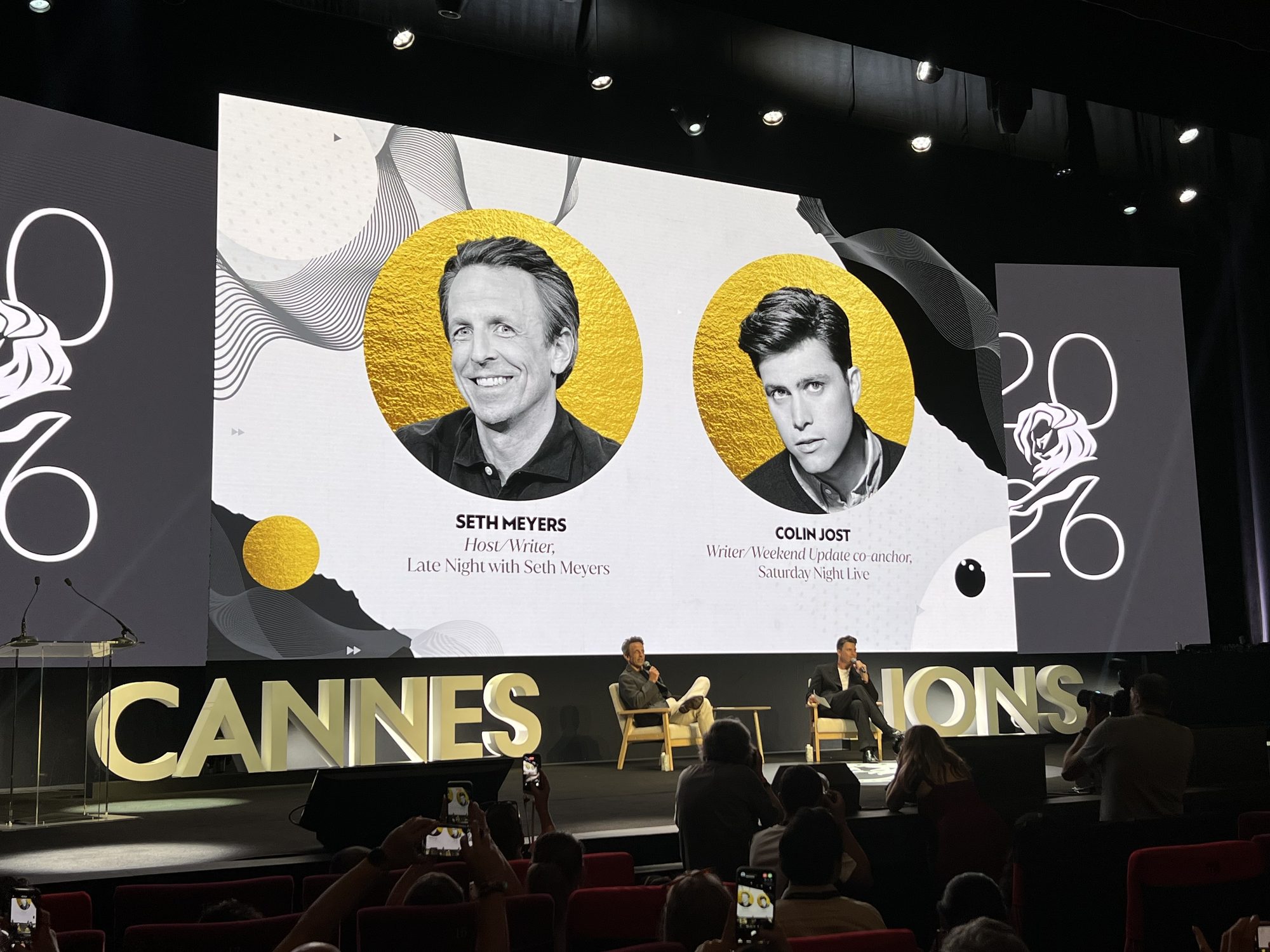
A recurring note across the festival — yes, even on the entertainment stages — is to build a real model of your audience before the audience shows up. NBCUniversal's Cannes stage discussed global fandom and franchises with Rachel Zoe, Seth Meyers, and Colin Jost. The conversations landed in the same place: a property that scales worldwide has, in effect, simulated its audience well enough to predict how a joke, drama, or special will be received.
Predictive intelligence is the muscle every commerce brand now needs. If an autonomous agent is about to decide on behalf of your customer — on a surface you don't own, against alternatives you can't see — the only durable advantage is knowing how your customer decides before the agent gets the question.
The eLLMo AI advantage: Brands that can express their commercial logic in a form an agent can reliably follow will outperform brands that cannot — but understanding your buyer before an agent does should be the priority. eLLMo AI Simulation is built on the Big Five (OCEAN) personality traits:
- Openness governs how a buyer processes novelty and mechanism.
- Conscientiousness governs demand for completeness.
- Extraversion and Agreeableness shape the weight a buyer places on social proof and community signals.
- Neuroticism governs risk-signal detection.
Conditioning a simulated buyer on OCEAN dimensions isn't a matter of appending a personality description to a prompt. Each dimension is operationalized as a set of behavioral parameters that the empirical literature attributes to that trait level — so the simulated buyer behaves and reacts the way your real customer would, in real time, as they experience your brand.
Understand the Consumer Journey Before You Spend
For two decades, brands have learned what blocks conversion the same way: ship the page, buy the traffic, watch the funnel, run an A/B test, repeat. Every lesson is paid for in live spend, and it arrives weeks — sometimes months — late. That sequence does not survive an agentic surface. By the time you've learned from live traffic that your product page is losing a specific archetype on a specific objection, an agent has already routed that archetype somewhere else hundreds of times.
The eLLMo AI advantage: eLLMo AI Simulation is built for exactly that gap. It runs your product page and creative against hundreds of AI-simulated buyers — synthetic personas scored on the OCEAN Big Five model and shaped to your real buyer profile. Simulation returns actionable insights marketers can deploy the same day.
Simulation defines what will convert and what will stall a customer before purchase — all before any live traffic is deployed — so marketing teams are empowered to make the right creative decisions before the agent shows up. Learn more about Simulation.
Redefining Brand Discovery and Performance in Agentic Commerce
Festivals reward narrative. 2024 brought generative AI to the villa; 2026 brought agentic orchestration. The narrative this week is that the marketing industry has publicly accepted the next operating layer as autonomous and transactional.
Under this narrative, marketers can build a real model of the buyer — the archetypes, the objections, the decision shape — and show up early to the agent layer of their category. Or they can wait to be discovered through someone else's interpretation of them.
Ready to see what your category looks like under agentic conditions before you spend next quarter's budget? Run your landing page through our Simulation.